
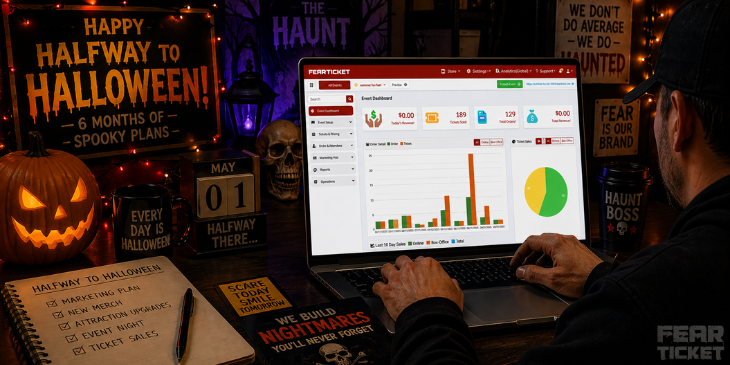
April 30th sits exactly six months out from Halloween. Most attraction owners treat it as irrelevant. The ones who consistently sell out treat it as a starting gun.
The logic is simple: SEO takes months to work. Group buyers plan ahead. Email lists need time to grow. If your haunted house marketing doesn’t kick off until September, you’re playing catch-up against attractions that have been building momentum since spring.
This guide covers what actually moves tickets, from choosing the right ticket platform for haunt to setting a price structure that rewards early buyers and creates real urgency when October hits.
Start With Your Ticket Platform - It's More Than a Checkout Page
Your ticket platform is the backbone of your entire sales operation, and most haunted house operators underestimate how much the choice matters. A weak setup costs you money in ways that are easy to miss: abandoned carts, mobile checkout friction, no upsell options, limited reporting.
When evaluating platforms, look for these ticketing features specifically:
Timed entry slots. Controlling capacity by time window reduces crowding, improves the guest experience, and lets you sell more event tickets across a single night without hitting a chaotic wall.
Early-bird and promo code support. You’ll want to run time-limited offers, referral discounts, and group codes throughout the season. A platform that makes this clunky will kill your campaigns before they start.
Group booking tools. Corporate teams and school groups often need to split payment, send invoices, or book for 20+ people at once. If your checkout doesn’t handle that, those buyers go elsewhere.
Mobile-first checkout. Most people will buy their event ticket on a phone. If the purchase flow requires pinching, zooming, or waiting, you’re losing sales.
Real-time analytics. Knowing which nights are selling fast, which promo codes are converting, and where buyers are dropping off is how you make good decisions in-season, not just guesses.
Pick a platform that handles all of this natively. Stitching together workarounds costs time and introduces failure points.
Ticket Price Strategy: Don't Just Pick a Number
Pricing is one of the highest-leverage decisions in haunted house marketing, and most operators either underprice out of fear or leave money on the table on peak nights by charging the same rate across the board.
A tiered ticket price structure does two things: it rewards buyers who commit early, and it creates organic urgency as dates fill up. Here’s a structure that works in practice:
Spring/early summer: Deepest discount, 25–35% off, available exclusively during a Halfway to Halloween campaign or similar spring launch. This is your most enthusiastic audience, superfans and planners. Give them a real reason to buy now.
Late summer: Moderate discount, 10–15% off standard rate. Still early enough to feel like a deal. Good for capturing buyers who missed the spring window.
September: Standard pricing. No discount, but availability messaging starts to matter. Sold-out warnings on specific dates push fence-sitters.
Peak October dates: Premium pricing – Friday and Saturday nights in October, Halloween week especially. Demand justifies it. Use it.
One thing to get right: be transparent about how pricing works. Put your price tiers on your website. Buyers who know that prices go up are more likely to purchase now rather than wait.
The Halfway to Halloween Campaign: Treat It Like a Real Launch
The horror and Halloween community already marks April 30th. Fan accounts post about it, spooky-season communities talk about it, and a dedicated slice of your audience is out there looking for any reason to engage with haunted attractions in spring.
A few things worth doing around this date:
Open your early-bird ticket window with a clear deadline. A limited quantity at your deepest discount creates genuine urgency without gimmicks. If you sell 200 tickets in April, that’s real cash flow and 200 people now invested in your season.
Drop a teaser. It doesn’t need to be a full reveal – a cryptic image, a 15-second Reel hinting at a new theme, a one-line email subject line. The goal is to get people talking before anything is fully announced.
Run a contest that generates user content. “Tag someone you’d drag through our haunted house” costs nothing and puts your attraction in front of new audiences organically. Winner gets a free ticket pair.
Gate something behind an email sign-up. A “what to expect” guide for first timers, a “survival tips” PDF – whatever fits your brand. Every email address you collect in April is a warm lead you can market to all summer at zero additional cost.
Haunted House Marketing Tips That Actually Work in the Off-Season
Email is your highest-return channel. Social algorithms change. Ad costs go up. Your email list is yours. If you have 3,000 subscribers, a well-timed email about a limited ticket release will outperform a boosted Instagram post. Send a Halfway to Halloween announcement, then monthly updates through summer – a new scare zone reveal, an actor spotlight, a theme hint. By September, your list already knows the season is coming and has been looking forward to it.
Short video outperforms everything else on social. Behind-the-scenes content – prop builds, makeup transformations, set construction – consistently gets reach in the Halloween niche even when posted in May. It’s interesting to people who aren’t even in your market yet. Post it consistently. Three to five times a week on TikTok and Reels if you can manage it.
Group sales close faster than you think. Corporate event planners, HR coordinators, and school activity leads are searching for October ideas in April and May. A dedicated group booking page on your site, optimized for terms like “corporate Halloween outing” and “haunted attraction group discount,” will capture buyers you’d otherwise miss. Then reach out directly via LinkedIn and email – a short pitch with a booking link converts well when the offer is clear.
Local SEO is a long game you need to start now. A Google Business Profile with fresh photos, recent posts, and active review responses will outrank neglected competitors in map results. Update yours today. Then build out location pages targeting city-specific search terms. The traffic won’t arrive overnight – which is exactly why you start in April.
Retargeting is cheap and effective. Install your pixel now, even if you’re not running ads yet. Build audiences from website visitors, email subscribers, and video viewers. When September hits, you’ll have warm audiences ready to convert – at a fraction of the cost of cold traffic.
The Bottom Line
Haunted house marketing isn’t a September project. The right ticket platform, a smart ticket price structure, and a few well-executed marketing strategies in spring will do more for your October sales than a last-minute ad blitz ever will. Start your email list growth now. Build your group sales pipeline. Get your SEO content indexed before the seasonal search wave hits.
The attractions that consistently sell out aren’t lucky. They just start earlier than everyone else.
FAQs
Isn’t April too early to market a haunted house?
Not if you understand why timing matters. Search rankings take months to build. Group buyers commit in spring. Early-bird ticket sales generate off-season cash and lock in buyers before competitors have their attention. The attractions that sell out fastest almost always start marketing in spring.
What ticketing features actually matter for a haunted house?
Timed entry, group booking support, promo code management, mobile check-in, and real-time sales reporting. These aren’t nice-to-haves – they directly affect how many tickets you sell and how well you can manage your operation in season.
How do I set a ticket price for early-bird buyers?
Anything in the 25–35% range is compelling without wrecking your margins. The key is pairing it with a hard deadline and a quantity cap. Unlimited early-bird pricing with no expiration date creates no urgency – and urgency is the whole point.
How do I get group bookings?
Build a dedicated page. Reach out to HR departments and corporate event planners via LinkedIn and email in spring. Make the booking process simple: clear pricing tiers, an easy-to-submit inquiry form, and perks like reserved entry times or a private window.
What’s the best social platform for haunted house marketing?
TikTok and Instagram Reels for reach, especially behind-the-scenes content. Facebook for older audiences and paid retargeting. YouTube for walk-through videos that rank in search. Video outperforms static posts on every platform right now.
When should I start paid advertising?
Start building your pixel audiences now. Run awareness campaigns in July or August. Shift to conversion ads in September. Starting early means your retargeting pools are full by the time peak-season ad costs climb.